Author: David Alsteens

Author: David Alsteens

Mechanics of Biological Systems in Health and Disease

We invite applications for a postdoctoral research position focused on the mechanical characterization of biological systems in health and disease, combining atomic force microscopy (AFM), advanced fluorescence and confocal microscopy, and quantitative biophysics. The project aims to elucidate how mechanical properties and forces emerge from molecular and structural organization, and how these properties are altered by pathological processes across multiple biological scales.

The position is available in the team of Dr. Andra C. Dumitru in the nBIO group at LIBST, UCLouvain, within a highly interdisciplinary research environment with access to state-of-the-art instrumentation for nanomechanical probing of soft matter and correlative imaging.

Job description

You will work at the interface of experimental biophysics, mechanobiology, and quantitative biology, developing and applying innovative approaches to characterize mechanical phenotypes across scales. Research directions may include:

  • Quantitative mechanical measurements of single molecules, cells, nuclei, and tissues
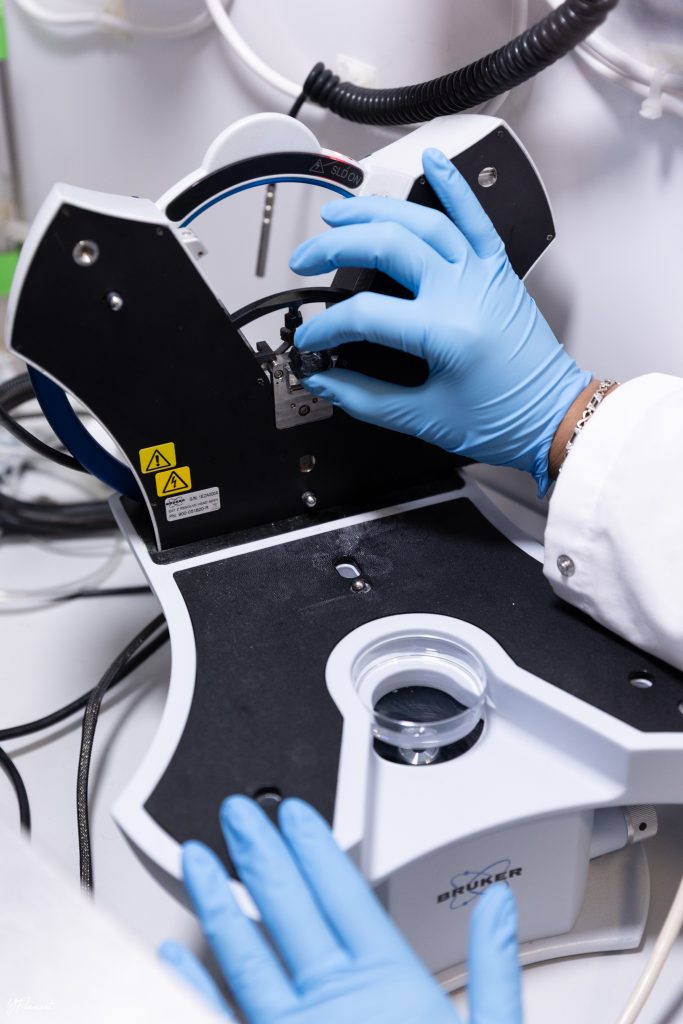
  • AFM-based force spectroscopy, indentation, and correlative AFM–confocal approaches
  • Investigation of structure–mechanics relationships, including the role of post-translational modifications
  • Mechanical phenotyping in physiological and disease contexts (cardiovascular disease, diabetes, neurodegenerative diseases)
  • Integration of mechanical data with imaging-based and molecular readouts
  • Development of new experimental or analytical pipelines for multiscale mechanical analysis

The project is intentionally open and offers substantial freedom to shape research directions based on the candidate’s expertise and interests, while remaining aligned with the group’s core focus on mechanics and disease.

Profile

We are looking for a candidate who has:

  • A PhD in Physics, Chemistry, Biophysics, or a closely related field
  • Experience with atomic force microscopy or related scanning probe techniques
  • Background or strong interest in single-molecule, cell, or tissue mechanics
  • Ability to work independently as well as collaboratively within a research team
  • Strong scientific communication skills in spoken and written English

We offer

  • A fully funded postdoctoral position for 1 year, with possibility of extension
  • Access to state-of-the-art AFM and advanced imaging platforms
  • A highly interdisciplinary and collaborative research environment within LIBST, UCLouvain
  • Opportunities for scientific independence, method development, and career development
  • Integration into an active international network in biophysics and mechanobiology

Application

Interested candidates should submit the following to Dr. Andra C. Dumitru by email.
Contact information for 2–3 referees willing to provide letters of recommendation

PhD student

Place Croix du Sud 4-5, bte L7.07.07 1348 Louvain-La Neuve Belgium

E-mail: ma.rodriguez@uclouvain.be

Tel. + 32 (0)10/47.35.88

Postdoctoral Researcher 

Place Croix du Sud 4-5, bte L7.07.07 1348 Louvain-La Neuve Belgium

E-mail: manorama.dey@uclouvain.be

Tel. + 32 (0)10/47.35.88

MSc student in Biological Sciences

Place Croix du Sud 4-5, bte L7.07.07 1348 Louvain-La Neuve Belgium

E-mail: florian.grandmont@student.uclouvain.be

Tel. + 32 (0)10/47.35.88

Postdoctoral Researcher (Fondation contre le Cancer)

Place Croix du Sud 4-5, bte L7.07.07 1348 Louvain-La Neuve Belgium

E-mail: valentine-lanting.wang@uclouvain.be

Tel. + 32 (0)10/47.35.88

Lab technician: Biomol-FACS-BioImager-BLI-Cell culture

Place Croix du Sud 4-5, bte L7.07.07 1348 Louvain-La Neuve Belgium

E-mail: amelie.deleau@uclouvain.be

Tel. + 32 (0)10/47.27.25

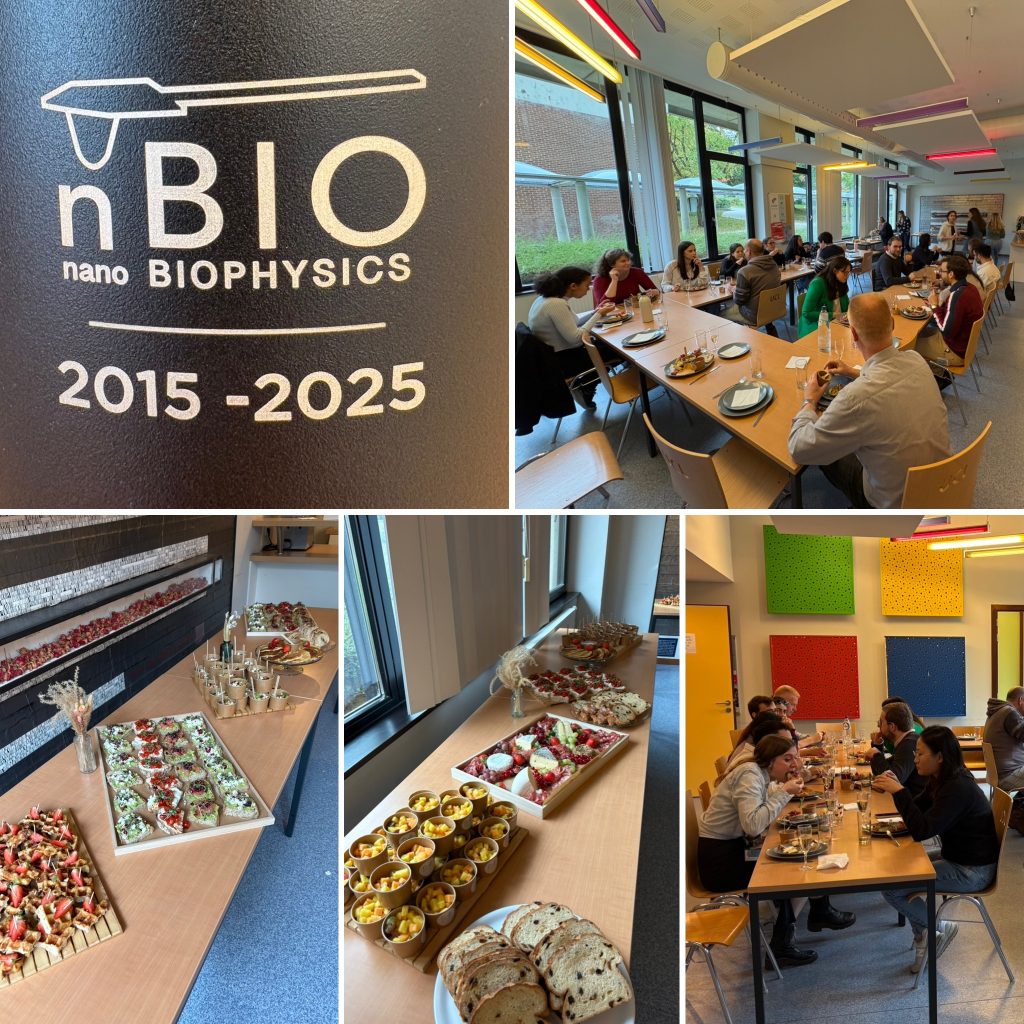
Ten years ago, I returned from ETH Zurich to launch my own research group thank to the FNRS… a small team with big ambitions to explore the fascinating world of molecular interactions at the single-molecule level.

A decade later, it’s incredible to look back at how far we’ve come. Over these years, I’ve had the privilege of working alongside many brilliant scientists… talented, curious, and creative minds who have shaped the identity and success of the lab. Today, many of them are shining in research institutes and companies all around the world, continuing to push the boundaries of science.

This milestone is not just about time, it’s about the journey, the discoveries, the challenges overcome, and the people who made it all possible.

Here’s to the past 10 years of curiosity, collaboration, and discovery… and to the exciting adventures still ahead!

Postdoctoral Researcher (ERC)

Place Croix du Sud 4-5, bte L7.07.07 1348 Louvain-La Neuve Belgium

E-mail: valentina.carrasco@uclouvain.be

Tel. + 32 (0)10/47.35.88

Senior Research Associate (F.R.S.-FNRS)

WELRI-Welbio Principal Investigator

Professor UCLouvain

Place Croix du Sud 4-5, bte L7.07.07 1348 Louvain-La-Neuve, Belgium

E-mail: david.alsteens@uclouvain.be

Tel. + 32 (0)10/47.35.98

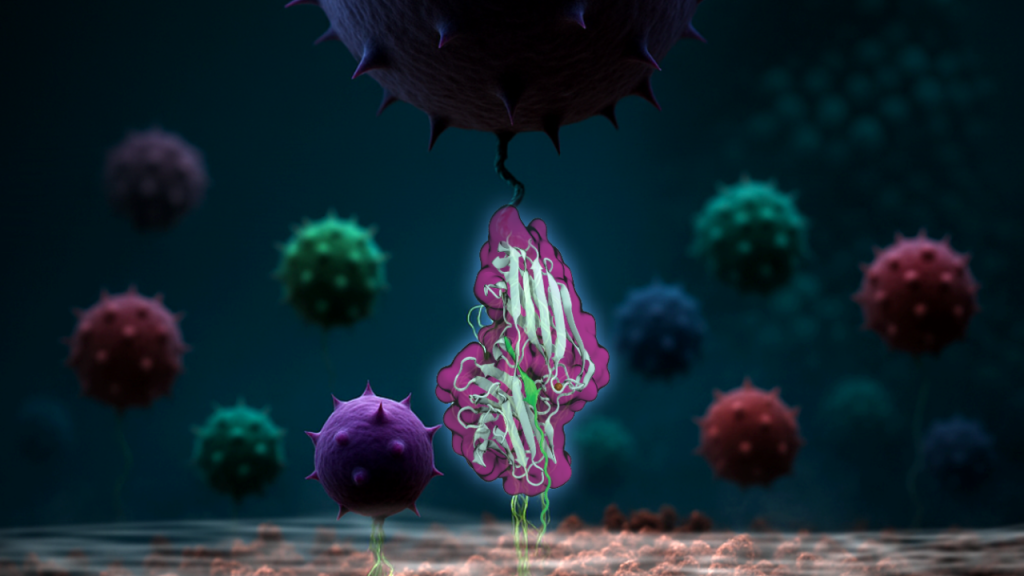
Staphylococcus aureus colonizes the human skin, thereby causing various disorders, including eczema. Highly virulent strains that are resistant to multiple antibiotics represent a leading cause of nosocomial infections that are difficult to eradicate, emphasizing the need for alternative treatments. Attachment of S. aureus to the skin involves specific bacterial cell surface proteins that bind to target ligands on the outer surface of the epidermis. 

In a recent study published in Science Advances, research teams from Auburn University, University of Birmingham, and UCLouvain used in vitro and in silico single-molecule force spectroscopy to demonstrate that the staphylococcal serine-aspartate repeat D (SdrD) protein forms ultrastrong bonds with the skin protein desmoglein-1 (DSG-1). This is among the strongest non-covalent protein-protein interaction ever reported, explaining why the pathogen remains attached to the skin even after scratching or washing, and helping us understand why these infections are so difficult to get rid of. Remarkably, the teams discovered that calcium, an element better known for strengthening bones, plays a key role in fortifying this bacterial grip. When calcium levels are reduced, the bond between SdrD and DSG-1 weakens significantly. When calcium is added back, the bond becomes even stronger. 

This finding is particularly relevant for patients with eczema, where disrupted calcium gradients amplify SdrD interactions, which could potentially intensify S. aureus virulence. This study provides crucial insights into the calcium-dependent regulation of pathogen adhesion and opens the door to new strategies for combating antibiotic-resistant infections. Instead of trying to kill bacteria directly, which often drives the evolution of resistance, scientists could design therapies that block or weaken bacterial adhesion.